Posts

The Bronx Masquerade

  Paige Holley Dr. Ellis Banned Books 5 February 2024 The Bronx Masquerade   In the first half of  The Bronx Masquerade  by Nikki Grimes students in Mr. Ward’s class find that they have more similarities than differences by listening and sharing their poetry in class on Fridays. Each student faces real world struggles that impact their personality and thought process. Students shared aspects of poverty, body images, fear of failure and more through writing poetry. However, as the novel progress’s readers can see a clear shift in students outlook on their classmates and their futures. The Bronx Masquerade gives readers a valuable lesson regarding expression and gaining confidence through artistic expression.    The sharing of personal feelings, thoughts, and beliefs through poetry has allowed students to feel heard. The confidence they have gained has not only become apparent in their poetry but their actions as well. One student who has shown a lot of growt...
The Hate You Give

  Paige Holley Dr. Ellis Banned Books 1 May 1, 2024 The Hate You Give   In the second half of  The Hate You Give  as readers we see a lot of development in the main character Starr, her family, and the community. After the death of Khalil and emotional turmoil and the events that followed his death shook the whole community causing many characters to re-evaluate certain aspects of their life. One character that I think showed a lot of development is Maverick.    Readers see that Maverick and now his daughter Starr both struggle with feelings of being a “sell-out”. Both characters have expressed the difficulties of to staying true to their community while trying to progress in a new area. A valuable lesson regarding identity and community is to be learned within the novel, and I do not think the similarities between Starr and Maverick’s journeys are unintentional by Thomas.    In the first half of the novel Maverick has the tendency to put his comm...

Gender Queer

The ending of  Gender Queer  offers valuable perspective regarding personal self-discovery. One aspect that I like about  Gender Queer  is that it is a memoir, so it follows Maia throughout eir entire life. I think that this offers readers a realistic perspective regarding the speed at which understanding yourself as an individual takes.    In the first half of the novel, we as readers get to follow Kobabe along eir journey through elementary, middle, and high school. The second half of the novel follows Kobabe through college and adulthood. One takeaway that I believe is beneficial to readers with similar backgrounds is the conversation between Kobabe and em Aunt Shari. In this passage Kobabe’s aunt expresses that she believes “…this trend of FTM, trans, and genderqueer young people” (Kobabe 199) is a form of misogyny, and “a deeply internalized hatred of women.”(Kobabe 199) Although, Kobabe does not agree that e is making these decisions for those reasons...

Melissa is for all kids

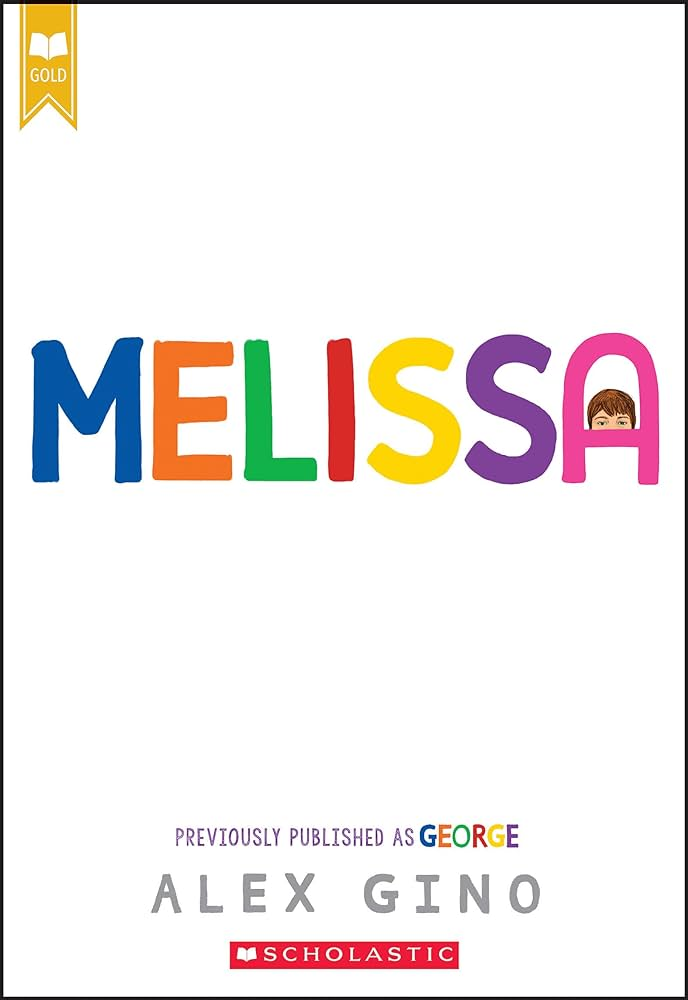
Image
When first reading Melissa , I have to admit that I did not like the book. Not because of the subject, or characters, but because it was simply a fourth-grader book, and felt extremely cliche. However, I will say that my opinion of Melissa has in fact changed. This book has elicited more emotional responses in me than other books have in a while. (The ending nearly had me in tears - I'm being SO honest). As a college student, I think it is easy to get caught up in the required readings of higher education especially when interacting with authors like T.S. Elliot, and Virginia Woolf. However, I think that it is refreshing to return to books we might dismiss as simple - like Melissa - can provide readers with a lot of introspection.       Melissa's journey from confusion, to self-acceptance, to courage and bravery is one that all kids can take something from. The decision to stand up for yourself and others, and step out of your comfort zone are lessons parents de...

Melissa Part 2

 Acknowledging vs Understanding  In the second half of Melissa by Alex Gino, I was focused on the role of female relationships. As an ally, Kelly had become quite possibly my favorite character, never once doubting Melissa, and proving her loyalty to her friend through so many moments of understanding and support. Compared to the relationship Melissa has with her mother, Kelly is unwavering at every opportunity. It made me think about the differences between acknowledgement and understanding. Kelly immediately accepts Melissa, never once questioning her feelings, and takes it upon herself to educate and inform herself so that she can be a pillar of support for Melissa to lean on. Giving up her second performance as Charlotte so that her friend can fulfill her small dream as well as have a moment to step into her identity, Kelly stands out drastically to many young kids.  Comparatively, Melissa's mother goes through a much more drastic range of support for Melissa. It's un...

Melissa and her Allies

  The most striking part of the ending of Melissa was how the characters acted as allies, giving Melissa help where they could, and admitting where they could not. Scott offers an example of sincere but uninformed acceptance, the principal shows understanding, and Melissa’s mother even asks for help in helping.   The scene at the beginning of the story where Scott and Melissa play video games struck me in particular as someone who grew up with an older brother who used the same exact excuse of “mom will think it’s brother bonding time” when he wanted to play together. Scott knew that there was something bothering Melissa, he just had no idea what . W hen he later gets an idea about her identity in Arnie’s, while sincere in his compassion, he clearly does not know how to handle this situation . Scott is constantly assuring Melissa that “I’m okay with that,” and “My friend Matt is gay,” b ecause he believes that she is his gay brother, but when she opens up ...

Alex Gino's "Melissa" and the Gendered Bounds of Emotionality

     On its surface, Alex Gino's novel, Melissa , is a rather simple tale about a young trans person coming to terms with her identity and learning how to advocate for herself, even when she does not have the support from key figures in her life like her mother and her teacher. Within it, however, there is a deeper question about the gendered bounds of emotionality and how society associates one's gender identity (or perceived gender identity) and one's capacity for emotions like sympathy, empathy, and understanding.     Melissa's favorite novel is Charlotte's Web , and the character with whom she most resonates is Charlotte the spider. Melissa loves Charlotte so much that, when Charlotte dies at the end of the book, she bursts into tears, both in sadness over the character's death and in reverence for Charlotte's kindness and wisdom. When Melissa is then picked on by Rick and Jeff for expressing her emotions in a way that seems unbecoming for someone whom o...

Melissa and Scott

We, as a society, tend to focus heavily on the negative repercussions of coming out—rejection, judgement, even cruelty. Especially in our class, where we lean into challenging conversations about. But there are so many reasons to celebrate coming out, and I felt as though Alex Gino did a wonderful job at conveying this message in   Melissa . I wanted to specifically talk about Scott, Melissa’s brother, and perhaps the most stereotypically teenage boy character I have ever read about. In the first half of the book, it is clear that Melissa and Scott have a somewhat strained sibling relationship. Melissa almost seems intimidated by her older brother, a reaction that may be inspired by the similarities between Scott’s character and that of Melissa’s school bullies. After coming out to her brother, however, Melissa is grateful for Scott’s nonchalant, yet supportive response. “Scott snuck glances her way too, but where Mom’s eyes with filled with concern and confusion, Scott looked at G...

Importance of Safe Spaces

          A section of the book Melissa  by Alex Gino that stood out to me was the scene in the principal office. Melissa had stood up to Jeff for his bullying, Jeff punched her causing her to throw up, and now they are having meetings with the principal. In the office, Melissa looks at the wall decor and notices a sign that says, "Support safe spaces for gay, lesbian, bisexual, and transgender youth." Heartbreakingly, Melissa wondered where she could find a safe space like that, and if there would be other girls like her there (Gino 125). Here I think Gino is pointing out how there needs to be more safe spaces and they need to be visible and better advertised to those who might need them. The sign suggests that the principal wants the school to be a safe space or at the very least her office. But for Melissa, school and her home are not safe places in which she can be herself without fear of bullying and unacceptance. At the end of the novel, Melissa ...

Melissa was pretty alright, though not a book I'd need to reread

  As I read and finish Melissa by Alex Gino, I must often remind myself that it is a book meant for children and young readers. I feel as though I like part of the story and other aspects I could go without. I don’t particularly enjoy having to do an in-depth analysis of a book created and written for younger audiences, but there is much to be discussed about this book.  First off, what is both a positive and negative aspect for this book is its easy digestibility. The feminine and masculine stereotypes are condensed into bite-sized pieces for younger children to understand and possibly even relate to, which just means that the book will be easily enjoyed. This is great because it sets up a linear understanding that Melissa hates all stereotypical boy things such as her ratty sneakers, but loves all stereotypical girl things like makeup and skirts and pretty swimsuits (which is valid because those things are fun!). Yet, there is a detriment to this mutual exclusivity of ste...

Melissa

     As much as I critiqued Melissa  in our class Monday, the story is so heartwarming and amazing. As a middle grade/children's novel, even though it has its faults just like any other book, it is soo powerful. Generally, Melissa  is about a kid coming to terms with her gender identity as a trans girl and finding that people, given time, are more or less supportive.       Kelly, even though initially she seems a little gender essentialist given her comments about Melissa being a boy because he has a penis, comes around incredibly quickly once Melissa actually comes out to her. Kelly is such an overwhelming and unquestionably supportive friend to Melissa with everything she does, and she shows that coming out to your friends, even though they may seem a little insensitive, you can come out on the other side without losing everyone and everything you love and care about, that there will (probably) be someone in your corner no matter what....

The Kids are Aright

  Tyra Alexander 10 April 2024 EN*499 Dr. Ellis The Kids are Alright After reading “Melissa”, I've come to realize that the kids are fine. A lot of discourse surrounding book bannings come from parents who are afraid of who their children might become. But, ‘might become what’? A decent human being? Many of the classmates in the novel showed me that children aren't the ‘creatures’ some adults may think they are. Yes, they’re easily impressionable but at their young age, they don’t harbor bias and discrimination in a way some adults do. However, it's inevitable that those adults who are prejudiced, raise prejudiced children. And we see that a lot with Melissa’s classmates. For example, the day after the play at recess, many of Melissa’s classmates, with the help of Kelly, congratulated Melissa and really commended her for taking that leap of faith. On the other hand, there was Jocelyn and Jeff who were not being very nice. I don’t blame this on them at all, I simply blam...

Kelly's Role in Melissa

     Over the course of Alex Gino's, Melissa , I was continuously struck by the portrayal of young students gaining access to vocabulary, becoming confident in their identities, and supporting one another. Specifically, these instances were depicted by Melissa and Kelly. I found this novel to be especially poignant for its its representation of young children understanding concepts of gender identity and handling the subject matter with care.      For instance, in the scene where Kelly first acknowledges the fact that Melissa is a girl, she says "I'm sorry I ignored you last week...and you know what? If you think you're a girl...then I think you're a girl too!" (Gino 104). Immediately following Kelly's reassurance, "the open-mouth surprise and joy on George's face only made Kelly smile harder" (104). In many ways, this scene reminded me of the moment that Justin comes out to Callie in Drama . Both scenes depict a character accepting the ident...

Gender Queer: Thoughts

The second half of  Gender Queer: A Memoir  by Maia Kobabe offers a lot of insightful, and thoughtful aspects of navigating a cis-gendered world. In the later chapters we see the narrator and main protagonist of the story Maia become emersed in the possibilities of the world after living a rather simple, sheltered, and traditional life.    An aspect that I appreciate about the novel is the idea of role models throughout the story. Maia highlights the influence of David Bowie’s music, Olympic figure skater Johnny Weir, and writings of Oscar Wilde. It is nice to be able to put names to thoughts and feelings; these people who were simply being themselves let other curious minds know that they are not alone with certain feelings. It is a way to easily develop upon certain ideas that were already forming. Now Maia has the opportunity to be a role model for students and expose them to a society where gender terms do not have to define your identity.    Another im...

Future Boobs, or The Dichotomy Of Childhood in Gender Queer

          Children are, on a very basic level, genderless at birth. They’re not sexless, but it can more or less ignored for the most part for the first few years of their life, save for in medical contexts. If you wrap a baby girl in a blue blanket, you’ll fool just about anyone into cooing, “What a handsome baby boy!”. Kids are mostly amorphous human beings until about age 9. I’m not just using this language to be subversive, I honestly dare you to take every toddler you can find, put them in identical dresses, and guess their sexes. It’s not impossible, but it’s hard. They’re all flat-chested and chubby-faced, and their hair is in different stages of still-learning-how-to-grow-out-evenly. I’m being vaguely inflammatory here, but my point is that Kobabe captures that seemingly ambivalent nature of childhood perfectly in the early pages of Gender Queer , detailing eir friendship with eir neighbor’s son, Galen.  The moment I’m talking about only take...

How Banning Harms Self Expression in Gender Queer

Image
🠊      In class, we've discussed mostly how book-banning harms the potential readers of those books, but banning harms the authors too. Most of the books we have read have incorporated the author's personal experiences, especially Gender Queer , a memoir of its author, Maia Kobabe. In this memoir, Kobabe expresses through comics eir personal experiences of eir journey of gender identity. Self expression is such an inate human thing, most people leave their mark on the world in creative ways, be that writing a book, writing their names on things, creating art, etc. Gender Queer  does not tell people what to do or how to act (so its not pushing an agenda) it is simply Maia Kobabe sharing eir life experiences, gender identity, and pronouns. Also eir growth from internalizing eir feelings to having the confidence to share emself with others. Sometimes words are hard or there isn't language available to articulate what you want to say. Kobabe found a way to achieve this ...

Thoughts and Opinions on Gender Queer

  I’m not going to lie, I enjoyed Gender Queer much, much more than I thought I would. Perhaps I still have a lingering sense of superiority over graphic novels, but there was true brilliance in this graphic novel that Kobabe was able to share. I had spoken to someone about this book and he said that it was truly written for students our age. Kobabe’s story is raw and real and vulnerable, sharing reality and is truly created for older audiences.      In class, we’ve had ample discussion about what it means to find value in a book that shares one’s own truth, and the same can be said about Kobabe’s story. The way e crafts the journey of eir life, from wondering to exploring to finding truths is something that was discussed in Dawson’s book This Book is Gay . Simply speaking, the ability to see the truth, a real life memoir and account that someone experienced is so powerful. This isn’t to say that any other book telling a story about gender dysphoria and the explorat...