Posts

Melissa is for all kids
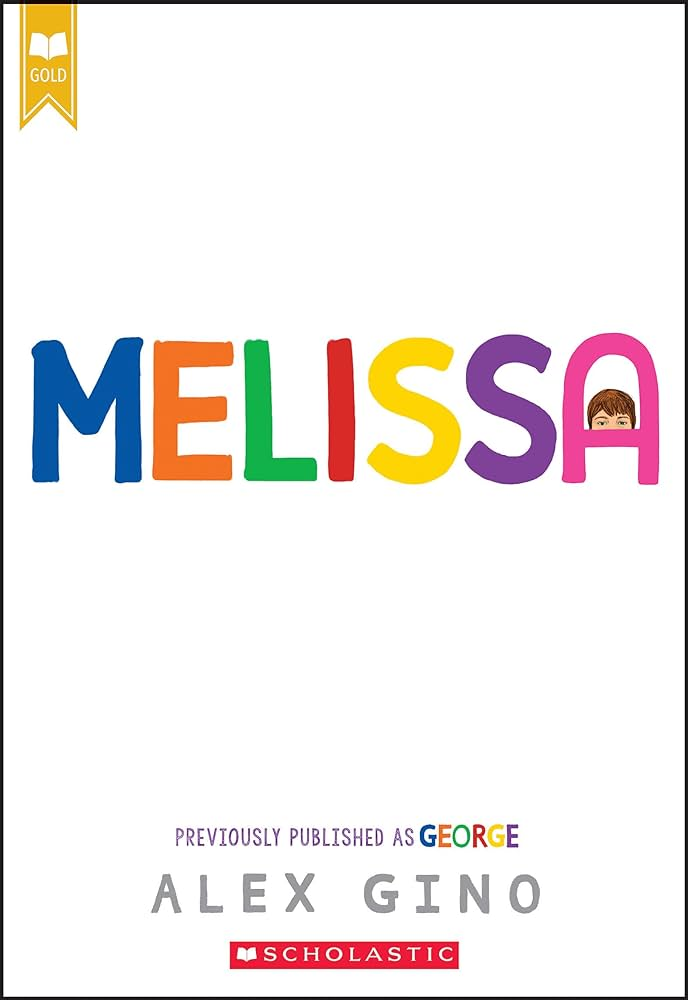
Image
When first reading Melissa , I have to admit that I did not like the book. Not because of the subject, or characters, but because it was simply a fourth-grader book, and felt extremely cliche. However, I will say that my opinion of Melissa has in fact changed. This book has elicited more emotional responses in me than other books have in a while. (The ending nearly had me in tears - I'm being SO honest). As a college student, I think it is easy to get caught up in the required readings of higher education especially when interacting with authors like T.S. Elliot, and Virginia Woolf. However, I think that it is refreshing to return to books we might dismiss as simple - like Melissa - can provide readers with a lot of introspection.       Melissa's journey from confusion, to self-acceptance, to courage and bravery is one that all kids can take something from. The decision to stand up for yourself and others, and step out of your comfort zone are lessons parents de...

Melissa Part 2

 Acknowledging vs Understanding  In the second half of Melissa by Alex Gino, I was focused on the role of female relationships. As an ally, Kelly had become quite possibly my favorite character, never once doubting Melissa, and proving her loyalty to her friend through so many moments of understanding and support. Compared to the relationship Melissa has with her mother, Kelly is unwavering at every opportunity. It made me think about the differences between acknowledgement and understanding. Kelly immediately accepts Melissa, never once questioning her feelings, and takes it upon herself to educate and inform herself so that she can be a pillar of support for Melissa to lean on. Giving up her second performance as Charlotte so that her friend can fulfill her small dream as well as have a moment to step into her identity, Kelly stands out drastically to many young kids.  Comparatively, Melissa's mother goes through a much more drastic range of support for Melissa. It's un...

Melissa and her Allies

  The most striking part of the ending of Melissa was how the characters acted as allies, giving Melissa help where they could, and admitting where they could not. Scott offers an example of sincere but uninformed acceptance, the principal shows understanding, and Melissa’s mother even asks for help in helping.   The scene at the beginning of the story where Scott and Melissa play video games struck me in particular as someone who grew up with an older brother who used the same exact excuse of “mom will think it’s brother bonding time” when he wanted to play together. Scott knew that there was something bothering Melissa, he just had no idea what . W hen he later gets an idea about her identity in Arnie’s, while sincere in his compassion, he clearly does not know how to handle this situation . Scott is constantly assuring Melissa that “I’m okay with that,” and “My friend Matt is gay,” b ecause he believes that she is his gay brother, but when she opens up ...

Alex Gino's "Melissa" and the Gendered Bounds of Emotionality

     On its surface, Alex Gino's novel, Melissa , is a rather simple tale about a young trans person coming to terms with her identity and learning how to advocate for herself, even when she does not have the support from key figures in her life like her mother and her teacher. Within it, however, there is a deeper question about the gendered bounds of emotionality and how society associates one's gender identity (or perceived gender identity) and one's capacity for emotions like sympathy, empathy, and understanding.     Melissa's favorite novel is Charlotte's Web , and the character with whom she most resonates is Charlotte the spider. Melissa loves Charlotte so much that, when Charlotte dies at the end of the book, she bursts into tears, both in sadness over the character's death and in reverence for Charlotte's kindness and wisdom. When Melissa is then picked on by Rick and Jeff for expressing her emotions in a way that seems unbecoming for someone whom o...

Melissa and Scott

We, as a society, tend to focus heavily on the negative repercussions of coming out—rejection, judgement, even cruelty. Especially in our class, where we lean into challenging conversations about. But there are so many reasons to celebrate coming out, and I felt as though Alex Gino did a wonderful job at conveying this message in   Melissa . I wanted to specifically talk about Scott, Melissa’s brother, and perhaps the most stereotypically teenage boy character I have ever read about. In the first half of the book, it is clear that Melissa and Scott have a somewhat strained sibling relationship. Melissa almost seems intimidated by her older brother, a reaction that may be inspired by the similarities between Scott’s character and that of Melissa’s school bullies. After coming out to her brother, however, Melissa is grateful for Scott’s nonchalant, yet supportive response. “Scott snuck glances her way too, but where Mom’s eyes with filled with concern and confusion, Scott looked at G...

Importance of Safe Spaces

          A section of the book Melissa  by Alex Gino that stood out to me was the scene in the principal office. Melissa had stood up to Jeff for his bullying, Jeff punched her causing her to throw up, and now they are having meetings with the principal. In the office, Melissa looks at the wall decor and notices a sign that says, "Support safe spaces for gay, lesbian, bisexual, and transgender youth." Heartbreakingly, Melissa wondered where she could find a safe space like that, and if there would be other girls like her there (Gino 125). Here I think Gino is pointing out how there needs to be more safe spaces and they need to be visible and better advertised to those who might need them. The sign suggests that the principal wants the school to be a safe space or at the very least her office. But for Melissa, school and her home are not safe places in which she can be herself without fear of bullying and unacceptance. At the end of the novel, Melissa ...

Melissa was pretty alright, though not a book I'd need to reread

  As I read and finish Melissa by Alex Gino, I must often remind myself that it is a book meant for children and young readers. I feel as though I like part of the story and other aspects I could go without. I don’t particularly enjoy having to do an in-depth analysis of a book created and written for younger audiences, but there is much to be discussed about this book.  First off, what is both a positive and negative aspect for this book is its easy digestibility. The feminine and masculine stereotypes are condensed into bite-sized pieces for younger children to understand and possibly even relate to, which just means that the book will be easily enjoyed. This is great because it sets up a linear understanding that Melissa hates all stereotypical boy things such as her ratty sneakers, but loves all stereotypical girl things like makeup and skirts and pretty swimsuits (which is valid because those things are fun!). Yet, there is a detriment to this mutual exclusivity of ste...